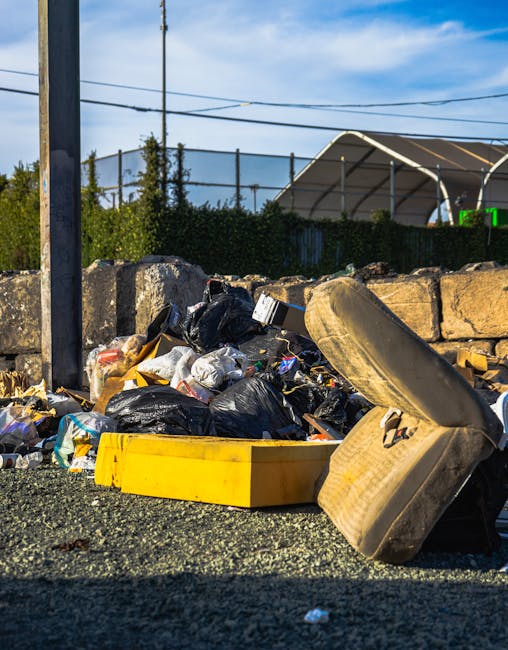
Tottenham rubbish removal near Tottenham Hotspur Stadium: a practical local guide
If you are dealing with bags, broken furniture, builder's rubble, or the aftermath of a flat clear-out, Tottenham rubbish removal near Tottenham Hotspur Stadium can feel more urgent than you first expected. Maybe you have limited space, a tight turnaround, or you simply do not want waste sitting around while people come and go. Fair enough. In a busy part of Tottenham, the right removal service is less about convenience and more about keeping life moving.
This guide explains how rubbish removal works near the stadium, what to expect, when it makes sense, and how to avoid the usual headaches. You will also find a simple checklist, a comparison table, and a real-world example to help you make a sensible choice without overthinking it.
Why Tottenham rubbish removal near Tottenham Hotspur Stadium Matters
Rubbish removal in this part of north London has a few extra moving parts. There is the usual everyday stuff: terraced homes, flats, commercial units, offices, and households that just need a reset. Then there is the stadium effect. On match days, nearby roads can be busy, footfall rises sharply, and parking can become a bit of a puzzle. Not impossible, just awkward.
That matters because waste left in the wrong place creates more than an eyesore. It can block communal entrances, make deliveries awkward, attract complaints from neighbours, and slow down trades working on tight deadlines. If you are a landlord, property manager, shop owner, or homeowner close to Tottenham Hotspur Stadium, clearing waste properly can save time and a fair bit of stress.
There is also a practical local angle. In a dense area, the smallest pile of unwanted items can become a bigger issue quickly. A sofa in a hallway. Cardboard in a shop rear area. Builder's waste outside a property awaiting collection. It looks manageable at first, then suddenly it is Tuesday afternoon and it is still there. You know the feeling.
Expert summary: Near Tottenham Hotspur Stadium, good rubbish removal is about timing, access, and responsible disposal as much as it is about lifting waste. The faster and cleaner the clearance, the easier everything else becomes.
For a broader overview of what a professional service should cover, it can help to look at the main waste removal service and the company's approach to recycling and sustainability.
How Tottenham rubbish removal near Tottenham Hotspur Stadium Works
In simple terms, rubbish removal means a team collects waste from your property, loads it safely, and takes it away for sorting, recycling, or disposal. The process is usually faster and less disruptive than trying to handle everything yourself, especially if the waste is bulky or too much for a standard car run to the tip. Let's face it, nobody enjoys three trips in traffic with a mattress tied awkwardly to the roof of a vehicle.
Most services begin with a description of the waste. You might send photos, list the items, or request a site visit depending on how much there is. From there, the removal team can estimate the load size, confirm whether anything needs special handling, and agree a time slot. In busy parts of Tottenham, that timing detail really matters.
On collection day, the crew should assess access, protect walls and floors where needed, and remove waste efficiently. If items are reusable or recyclable, they should be separated where practical. If the job involves mixed materials, the team may sort items later at a licensed transfer or processing facility. The important thing is that it is handled properly, not just dumped and forgotten.
For certain types of waste, specialist services are more suitable. For example, if you are dealing with a broken appliance, check the option for fridge and appliance removal. If it is a mattress or a sofa, the dedicated mattress and sofa disposal page is the more relevant route.
What the process usually includes
- Initial enquiry and waste description
- Photo review or quotation guidance
- Booking a collection slot
- Arrival and access check
- Loading, tidying, and removal
- Sorting for reuse, recycling, or disposal
Key Benefits and Practical Advantages
The obvious benefit is that the rubbish disappears. Nice, simple, done. But the real value goes further than that.
1. Faster turnaround. If you need a property clear before a tenancy starts, a sale completes, or a builder arrives, rubbish removal can keep the schedule intact. Near a large venue, timing can be especially helpful because delays tend to ripple outward.
2. Less physical strain. Moving heavy items down stairs or through narrow hallways is not fun and can be risky. Professional removal avoids the awkward lift, the scuffed wall, and the backache that lingers for the rest of the day.
3. Better presentation. This matters for homes, offices, and commercial units alike. A clean, clear space helps with viewings, trading, handovers, and general peace of mind.
4. More responsible disposal. Good operators aim to separate waste streams and divert recyclable items where they can. That is not just a nice extra. It is part of doing the job properly.
5. Less disruption near the stadium. If you are working close to match-day routes or busy streets, a planned collection can be easier than arranging skips, repeat van trips, or ad hoc disposal.
For businesses, the benefit is often about continuity. A clear back room, storeroom, or office means staff can work normally again. If your waste is commercial in nature, it is worth reviewing business waste removal and, where sensitive documents are involved, confidential shredding.
Who This Is For and When It Makes Sense
Truth be told, almost anyone with too much waste and too little time could benefit. But some situations come up again and again around Tottenham Hotspur Stadium.
- Homeowners and tenants clearing old furniture, bags, clutter, or loft contents
- Landlords and letting agents turning around flats between occupiers
- Builders and tradespeople needing quick builders' waste clearance after a job
- Shops, cafes, and offices dealing with packaging, fixtures, or routine clear-outs
- People downsizing and needing a sensitive, orderly removal
- Anyone near the stadium where access, parking, and timing need a calmer approach
It also makes sense when the waste is too bulky for normal council collection or when you want a same-day or next-day solution. If you are clearing a home rather than just a few items, a wider house clearance or home clearance may be the better fit. For smaller properties or flats, flat clearance can be more practical.
And if the waste has built up in different parts of the property, the specialist routes can help: garage clearance, loft clearance, or office clearance.
Step-by-Step Guidance
If you want the smoothest possible experience, treat rubbish removal like a short project rather than a last-minute chore. A little planning makes a big difference.
- Walk through the waste. Check every room, hallway, cupboard, outdoor corner, and storage area. People always underestimate the amount, always.
- Separate obvious categories. Keep furniture, electronics, general rubbish, cardboard, and any potentially hazardous items apart if possible.
- Flag awkward items early. Things like fridges, freezers, paint, chemicals, and sharp debris need extra attention.
- Take clear photos. Good images help with accurate quoting and prevent surprises on collection day.
- Check access. Think about lifts, stairs, permits, loading points, and whether the team can park close enough.
- Choose a suitable service. A basic waste removal job is not the same as a full property clearance or builders' waste job.
- Prepare the site. Move pets, open gates if needed, and leave the waste as accessible as possible.
- Confirm the final plan. Recheck timing, pricing basis, and any special instructions before the team arrives.
If the job is mainly renovation debris, the dedicated builders' waste clearance service is likely the more suitable route. For a garden build-up, use garden clearance. Different waste types, different handling. Simple as that.
Expert Tips for Better Results
Here are the small things that make a rubbish removal job go more smoothly. They sound basic, but they save time and money more often than you might think.
Be precise about volume. A "few bags" can become ten bags very quickly. If in doubt, take one more photo and be honest about the scale.
Keep access clear. Hallways, front paths, basement steps, and communal entrances are often the bottlenecks. If the team can move freely, the whole job feels easier.
Group similar items together. If all the furniture is together and all the loose waste is in one area, loading becomes faster and safer.
Separate anything risky. Hazardous materials, sharp metal, heavy appliances, or leaking containers should not be mixed in casually with normal household rubbish. If you are unsure, ask first. Better to pause than to create a problem.
Think about timing around the stadium. On busier days, earlier or later windows may be more sensible. A collection at 7:30am can feel far easier than one that collides with traffic and footfall later in the day.
Ask how recycling is handled. Responsible removal is not just about taking things away. It is about what happens next.
If you want to understand the company behind the service, the about us page is useful background, and the insurance and safety page can help reassure you about process and protection on site.
Common Mistakes to Avoid
There are a few classic errors people make when booking rubbish removal near a busy venue. None of them are dramatic, but they can turn a straightforward job into a mild headache.
- Not checking the exact waste type. A mixed pile may need a different approach from a simple household clear-out.
- Assuming access is easy. A van cannot always stop exactly where you want it. Not if the street is tight, anyway.
- Leaving items scattered. Spread-out waste takes longer to load and sometimes leads to missed items.
- Forgetting specialist items. Appliances, mattresses, and hazardous materials can change the job requirements.
- Choosing only on price. Cheap is not always cheaper if the job is delayed, incomplete, or handled poorly.
- Ignoring building rules. Shared entrances, concierge arrangements, and estate restrictions can all affect collection.
A tiny extra note: if you are clearing a flat, do not assume the same plan will work for a house. There can be less room, more stairs, and a lot more bumping into doorframes. That is just life in London sometimes.
Tools, Resources and Recommendations
You do not need specialist kit to prepare for rubbish removal, but a few basic tools help.
- Heavy-duty bin bags for loose mixed waste
- Moving gloves for sharp edges and dusty items
- Marker labels if you want to tag items that must stay or go
- Phone camera for photos and inventory notes
- Measuring tape for large furniture or access checks
- Cleaning spray and cloths for a quick tidy after clearance
In practical terms, a simple photo album on your phone is one of the best tools you have. It gives a clean record of the waste, helps with quoting, and saves endless back-and-forth. That alone can shave time off the booking process.
For people comparing disposal routes, the website's guide on what can go in a skip is helpful when you are deciding between skip-style disposal and full man-and-van rubbish removal. If you are still pricing things up, the pricing and quotes information can clarify how estimates are handled.
Law, Compliance, Standards, or Best Practice
For rubbish removal in the UK, the main principle is straightforward: waste should be handled responsibly, transferred correctly, and disposed of through lawful routes. You do not need to become an expert in waste legislation to book a service, but you do want reassurance that the company follows normal UK best practice.
That means a few sensible things. Waste should be carried safely. Duty of care should be taken seriously. Hazardous or specialist items should not be treated like ordinary household rubbish. And if paperwork, sharps, chemicals, or electrical items are involved, they should be separated or handled with care rather than bundled into a general load. Common sense, really, but it is surprising how often that gets overlooked.
Good practice also includes clear pricing, safe loading, proper insurance, and a transparent complaints route if anything goes wrong. For readers who value that kind of reassurance, the pages on health and safety policy, complaints procedure, payment and security, and terms and conditions are worth reviewing before booking.
For waste that may be sensitive or unusual, such as chemicals or contaminated materials, use the dedicated hazardous waste disposal route rather than guessing. That is one area where guessing is a terrible strategy.
Options, Methods, or Comparison Table
People near Tottenham Hotspur Stadium usually choose between a few removal methods. The best one depends on volume, access, urgency, and what the waste is made of.
| Method | Best for | Strengths | Trade-offs |
|---|---|---|---|
| Man and van rubbish removal | Mixed household or business waste, bulky items, fast clearances | Quick, flexible, little disruption, good for awkward access | Depends on load size and access; may need sorting first |
| Skip hire | Projects with ongoing waste over several days | Useful for gradual fill, suitable for some building jobs | Needs space, permits may matter, not ideal for tight streets |
| Specialist item removal | Appliances, sofas, mattresses, or specific waste types | More targeted handling, better for awkward items | Not the right choice for general mixed rubbish |
| Full property clearance | Homes, flats, garages, lofts, offices, and complete resets | Most comprehensive, good for emptying whole spaces | More involved than a simple collection |
As a rule of thumb, if the job is a one-off clear-out with no intention to keep a container on site, rubbish removal is usually the cleaner solution. If you are still unsure, start with the item type and the access route. Those two details answer most of the question.
Case Study or Real-World Example
A typical local scenario goes like this. A small rental flat just off the stadium has reached the end of a tenancy. The tenant has left behind two chairs, a damaged bedside table, several bin bags, a microwave, and a stack of cardboard in the hallway. Nothing extreme, but enough to make the space feel cramped and untidy.
The landlord wants the place ready for cleaning the next morning. The building has a narrow stairwell and limited loading space outside, so waiting for a skip would be awkward. A rubbish removal team is booked for an early slot before traffic picks up. The team arrives, confirms what is being taken, removes the items in one visit, and tidies the access area. The hallway is clear again by mid-morning.
That kind of job sounds simple, and mostly it is. But the difference is in the calm execution. No dragging items down stairs by yourself. No figuring out whether the microwave counts as regular waste. No pile sitting there for three more days because everyone is "too busy at the moment." The flat is ready, and the whole handover feels less rushed.
For properties of that type, the relevant services may include flat clearance and, if needed, a wider home clearance. Small job, big relief.
Practical Checklist
Use this before you book or on the morning of collection. It keeps things straightforward.
- Confirm exactly what needs removing
- Separate general waste from appliances, furniture, and hazardous items
- Take photos of every area involved
- Check stairs, lifts, parking, and access gates
- Move anything you want to keep out of the way
- Tell the team about fragile walls, narrow corridors, or tricky corners
- Ask whether any item needs specialist handling
- Review pricing, payment, and collection timing
- Make sure the waste is easy to reach
- Keep the phone handy in case the crew needs directions
If you are clearing a larger storage area, consider whether a more focused service like garage clearance or loft clearance would help you get a cleaner result with less fuss.
Conclusion
Tottenham rubbish removal near Tottenham Hotspur Stadium is really about making a busy area easier to live and work in. Whether you are dealing with a one-off pile of waste, a post-renovation clear-up, or a full property reset, the right approach saves time, reduces stress, and helps keep everything moving.
The best outcomes usually come from clear photos, honest descriptions, sensible timing, and a service that treats access and disposal properly. Nothing flashy. Just a straightforward job done well. And in a neighbourhood that can get lively very quickly, that sort of reliability is worth quite a lot.
Get a free quote today and see how much you can save.
If you are ready to take the next step, it is worth using a company that knows the area, explains the process clearly, and handles the work with care. The aim is simple: remove the mess, keep the day on track, and let you breathe again.
Frequently Asked Questions
What counts as rubbish removal near Tottenham Hotspur Stadium?
It usually means collecting and taking away unwanted waste from homes, flats, offices, shops, or building projects close to the stadium. That can include bagged rubbish, furniture, appliances, cardboard, or mixed clearance waste.
Is rubbish removal better than skip hire for this area?
Often, yes, if you want a quicker, less space-hungry solution. Near the stadium, parking and street access can make skip placement awkward. Rubbish removal is usually more flexible for one-off clearances.
Can you remove bulky items like sofas and mattresses?
Yes, those are common items for a removal team. For the most suitable handling, use dedicated services such as mattress and sofa disposal or furniture clearance.
What if I have appliances to dispose of?
Appliances often need special handling, especially fridges and freezers. It is best to mention them early so the team can plan the correct collection method.
Do I need to sort the rubbish before collection?
Not always, but sorting into broad categories helps. Keep hazardous materials, electrical items, and furniture separate if you can. It makes the job faster and reduces the chance of mistakes.
How quickly can rubbish be removed?
That depends on availability, the amount of waste, and access. Small jobs can often be turned around quickly, while larger clearances may need more planning. Around the stadium, early booking is usually the safest bet.
Is the service suitable for businesses near the stadium?
Yes. Offices, shops, cafes, and other commercial spaces often use rubbish removal for packaging, fixtures, unwanted stock, and general clearance. Business waste removal is the relevant service page to review.
What happens to the rubbish after collection?
It is usually taken to a facility where it can be sorted for reuse, recycling, or disposal. The exact route depends on the waste type and condition of the items.
Can hazardous items be collected too?
Sometimes, but they should always be disclosed first. Certain materials need specialist handling, so use hazardous waste disposal rather than mixing them into a general load.
How do I know the service is trustworthy?
Look for clear pricing, safety information, proper handling of waste types, and a professional process from booking to collection. It also helps when a company is transparent about its policies and customer journey.
What should I do if the waste is in a loft, garage, or storage area?
Use the relevant clearance service if the space is particularly cluttered. A garage clearance or loft clearance is often the best way to avoid partial, messy results.
How do I get a quote?
Send clear photos, explain the waste type, and mention access details. If you want more guidance on pricing structure, see pricing and quotes or go straight to book online.
Can I ask for a full house or home clearance instead?
Yes, and that is often the better option when there is waste across multiple rooms or an entire property to clear. In that case, house clearance or home clearance is likely more suitable.
Where can I learn more about the company?
You can start with the about us page and the company's policies if you want a better sense of how it works and what standards are used. A quick read can save a lot of guesswork later on.