Commercial Waste Removal Tottenham — Recycling and Sustainability
Eco-friendly waste disposal area and a thriving sustainable rubbish area
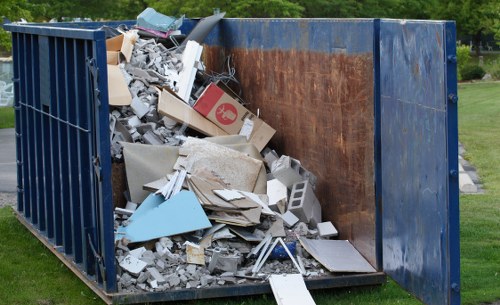 Commercial Waste Removal Tottenham is committed to building an eco-friendly waste disposal area across the borough. Our approach to Tottenham commercial waste removal focuses on maximising reuse and minimising landfill by applying proven segregation, reuse and recycling practices. We work within the local boroughs' systems and complement their policies, helping businesses move from single-stream disposal to clearly separated streams: dry recycling, glass, organics and residual waste. Every load we collect is assessed so that materials that can be diverted from waste to resource are identified and recovered.
Our sustainable rubbish area strategy aligns with the wider boroughs' approach to waste separation: clear labelling for paper and card, food and garden organics, plastics and glass, plus dedicated containers for bulky items. Tottenham commercial rubbish removal services support these separation rules on site so that commercial customers are not only compliant but actively increasing their recycling rates. We emphasise staff training, tailored bin layouts and simple signage to make separation habitual for on-site teams.
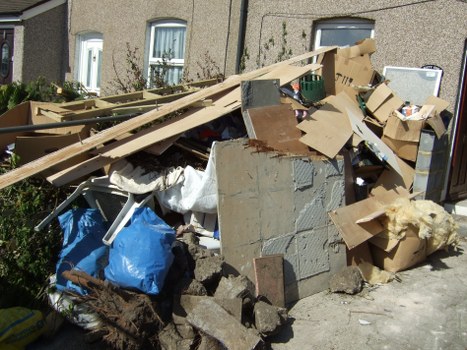 To make progress measurable we set a recycling percentage target for our commercial waste collections: a 75% diversion rate by 2028 for all non-hazardous commercial waste collected in Tottenham. This target is ambitious but achievable when combined with source separation, reuse partnerships and targeted processing at local facilities. We report performance regularly, showing how Tottenham commercial waste removal can contribute to a low-carbon, circular economy.
Practical routing to nearby transfer stations is key to keeping an eco-friendly waste disposal area efficient. We route separated materials to local transfer stations and treatment sites such as Edmonton EcoPark, the Haringey/Wood Green recycling facilities and other North London transfer stations serving the borough. These sites accept segregated streams and ensure materials enter the correct processing chain, whether for anaerobic digestion for food waste, MRF processing for mixed recyclables, or dedicated reuse and repair hubs for reusable items.
 Partnerships with charities are central to our sustainability model. We collaborate with local not-for-profits — including furniture reuse groups, food redistribution networks and community reuse initiatives in Haringey — to redirect usable items away from bulky waste streams. Our reuse partners receive carefully recovered items that would otherwise be demolished or landfilled, extending life cycles and supporting local social enterprises. Examples of recycling and reuse activity in the area include:
- Paper and cardboard collection for local MRFs and packaging recovery
- Glass and cans sent to specialist processors for closed-loop recycling
- Separated food waste routed to anaerobic digestion plants
- WEEE (electricals) collected for compliant recycling or refurbishment
- Construction and demolition materials crushed and reclaimed where possible
These activities reflect the boroughs' emphasis on separating food and dry recyclables at source and prioritising reuse where possible. Our Tottenham commercial rubbish removal teams document items suitable for charity transfer, and we maintain scheduled charity runs to minimise landfill-bound bulky waste.
To reduce operational emissions we deploy a low-carbon fleet: a mix of electric vans, plug-in hybrids and Euro 6 low-emission vehicles for heavier loads. Fleet electrification, combined with route optimisation software and consolidated collections, cuts unnecessary miles and reduces local air pollution. Every van in our fleet follows designated low-emission routes where possible and returns with sorted loads to ensure materials reach the appropriate local transfer station quickly.
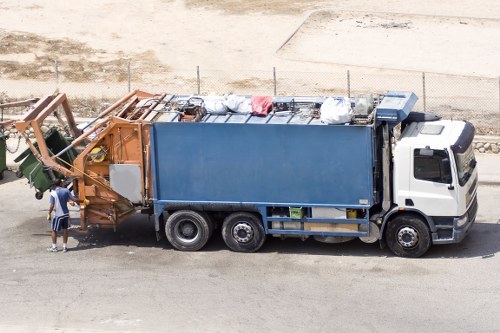 Sustainability is also embedded in how we measure success: regular audits, robust weight-based reporting and clear diversion metrics let customers see progress against the recycling percentage target. We set interim milestones (50% within 12 months, 65% within 36 months) and produce transparent summaries of source-separated tonnages directed to recycling, energy recovery or reuse. This measurement-led approach helps businesses understand savings, regulatory compliance and carbon reductions from better waste management.